Wednesday, June 5, 2013

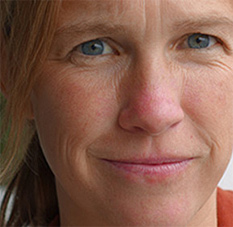
Lionel Shriver talks about Big Brother, the real meaning of food, fame, writing, and so much more.


Lionel Shriver is a literary heroine of mine. This adulation began shortly after I plucked up her first book, the Female of the Species, which was so inventive, so gorgeously written, and so funny and heart-shattering , that I actually bought two copies, just in case I lost one. I've followed her career ever since, but it's not just her novels that interest me so deeply. She's outspoken about everything from the bad, too girlie covers publishers often put on women's books, to her years of professional disappointment before We Need To Talk About Kevin won the Orange Prize and So Much For That was a National Book Award Finalist, followed by the highly-acclaimed The New Republic. 

I so admire her--and her work--that I tracked her down, and actually wrote her a bonafide letter, not really expecting a response. I'm honored to post the interview I did with her about her extraordinary newest novel, Big Brother, which is about food, weight, and what we owe the ones we love. 

Thank you so much, Lionel.


Some writers want to talk about the backstory to a book, but others get irritated and think the work should stand on its own, so please feel free to ignore this first question: I did read (and I'm sorry to hear about it) that your brother died from complications due to obesity. Was this and your own trajectory to fame part of the impetus in writing the novel? 

From the very inception of "Big Brother" I've been torn over how much to expose--and implicitly to use, which is potentially ugly--my real older brother in the publicity for this novel.  It's a matter of public record that he died in late 2009 from complications related to his weight.  But he was a remarkable, unusual person, and (as I note of Edison in the last chapter) would never have wanted to be posthumously famous primarily for being fat.  On the other hand, having seen up close how painful it is to see someone you love reduced to a walking wad of lard in others' eyes has made me so much more sympathetic with anyone who battles a serious weight problem.  My real brother gave me a point of entry with this subject matter that was implicitly kind.  In a legal sense, the history of obesity in my own family has given me standing.  Otherwise, I'd be in danger of appearing one more skinny bitch scolding the slobs to get a grip.

As for the topic of fame (btw, a disclaimer: I'm pretty well known in the UK, but wouldn't consider myself remotely "famous" in the US, and no fiction writer enjoys--if that is the word--the scale of celebrity that actors or pop musicians do, even after winning Bookers and Pulitzers): it intermingles with the weight-and-food theme in a manner that I found surprisingly productive.  My own small experience of, say, going to a literary party and discovering that I don't have to introduce myself anymore has been something like, "Well--huh.  Isn't that weird."  My reaction to career successes has been emotionally mild.  This was a big surprise.  I suspect this sense of mildness is common, but--not wanting to appear ungrateful--most successful people keep their mouths shut on this point.   

What does celebrity have to do with weight?  Both issues involve appetite.  Desire, anticipation, craving. My theory is that both food and fame are ultimately unsatisfying.  As the narrator of BB notes, they are the idea of satisfaction, "far more powerful than satisfaction itself."  Yet desire is what is truly satisfying.  Desire has trajectory.  It has energy.  Getting what you want, or what you thought you wanted: you just sit there.  (See a later answer on the subject of sitting.)  So you're better off staying hungry--in relation to food and fame both.


Why do you think food is less about nutrition and pleasure than it is about control? How on earth did we get that way? Through the book, you explore diet culture, where no one is left off the hook. Fletcher’s insistence on healthy eating is frankly joyless, while Edison’s overeating is often disgusting--yet neither man takes any real pleasure in food. Why do you think we really no longer know how to eat?

That's right: both the hyper-disciplined character and the indulgent over eater fail utterly to enjoy their food.  How did we get this way--how did we evolve so that, as Pandora remarks once, opening the refrigerator "is like staring into a library of self-help books with air conditioning"?  It's a puzzle.  If anything--and this is admission against interest, since in publishing this novel I could be part of the problem--in our era eating has been over-examined.  This simple daily activity has become self-conscious, when it's meant to be a matter of primitive instinct.  God, all those food shows on TV, all the recipe columns in magazines (which I read, by the way).  The studies, the diet drugs, the endless fucking advice.  We've made it too important.  We've turned it into a national obsession, and that obsession has backfired.


Big Brother also talks to the whole issue of how fame kills and starves us, even as we’re addicted to it the same way we crave chips. Edison was a star who plummeted back down to earth. Tanner is mocked for wanting to be in the movies. Why do you think we’re all so hungry for fame? And why doesn’t it ever feed us? There’s a difference in what we really expect food/fame to do for us, and what it really does do, and how tied up in emotions it is for us. Can you talk a bit about that, please?

It's probably a good idea to separate two concepts, and thus two experiences (which I just realized I conflated myself in a previous answer): success, particularly success in one's own terms, and celebrity.  As for the latter, it's the cotton candy of the career world.  The ambition to be known by a bunch of strangers, or--a distinction Pandora makes--to convince a bunch of strangers that they know you when they don't--is overtly pathetic.  Empty.  Unnutritious. 

Yet I wouldn't entirely do down achievement.  There's a feeling I get when I finish a book and I conclude, yes, that is what I wanted to write, and I think it works.  That sense of achievement is very private, and quiet, but "quiet" isn't the same thing as "mild."  I don't jump up and down or open champagne.  But I do have a warm, whole, resolved sensation (mingled with no little relief, since of course I've probably been hacking away at this first draft for at least a year), which I also experience on a smaller scale when I finish a paragraph or a scene that pleases me.  This is a sensation I can commend.  It doesn't have to do with winning awards or getting a good review--or at least not from a third party.  It's getting a good review from yourself, and I'm sure many other professions have equivalents.  Unfortunately, this gently, quietly gratified glow doesn't last very long ...


There’s also a lot in the book about the difference between New York and Midwestern values, and how the sense of place informs us or nurtures us. You yourself live in both London and Brooklyn. Do you feel more of a pull to one place than another? Do you feel and operate differently in each? And do you think place really changes us or it just the appearance of change?

I'm never sure how much place matters, and as fiction writers go I may not put as much emphasis on setting as many of my colleagues.  I did quite deliberately set this novel in Iowa.  I liked the natural parallel between the Midwest and modesty--Iowa is anti-fame.  Anti-NY as well.  The "heartland" is also where a lot of the weight gain in the US has taken place, so I thought this choice of state sociologically apt.  Moreover, my mother grew up in Iowa; my own grandparents lived there; my younger brother still lives there, and I go out to visit him every year.  So I'm familiar with the place, and have gradually come to appreciate why my younger brother long had ambitions to move to Iowa (of all places), though he went to high school in Manhattan.  It's beautiful--serene.  As I think on it, that long horizon, those wafting cornfields, those big soft skies, the golden light: the landscape is a pictorial representation of the "gently, quietly gratified glow" that I cited in my last answer.  I identify Iowa with being satisfied--w not needing that much, with being content with your lot.  W what Edison finally seems to find there toward the end of the novel: accommodation to ordinary life.  

My only reservation about choosing Iowa was that the Iowa Writers Workshop has enticed all too many aspirant novelists and short story writers to set fiction there.  I decided to live with that.  Iowa is part of my territory, and I wouldn't be bullied out.

This is, of course, not what you asked.  I must be tired of answering questions about NY vs London.  The main difference for the cities for me is the set of politics with which I engage.  Right now I'm up to my neck in exasperation that George Osborn can't seem to appreciably reduce housing benefit and dismay over why anyone gives a toss that there's horse meat in Findus lasagne.  When I head for NY, I'll change channels.  I'll get exercised about the sequester and rail at the TV over why Obama never seems to propose any cuts to the federal budget or restrictions on entitlements.  I'll stop reading the Daily Telegraph.


Without giving anything away, I want to talk about the stunner of an ending, which reminded me a bit, of what you did with the brilliant We Need To Talk About Kevin, which was to make the narrator unreliable, and to shift our focus from what we thought we knew we were reading about to a deeper, more disturbing meaning. So how is the alchemy done? Was this something planned out ahead or did it evolve organically in the writing?

I came up with the ending about halfway through.  I had intended a different ending, but I was unhappy about it.  As you say, not to give anything away, but I did not want, fiercely did not want, to write a novel whose message was that it was hopeless to try to lose weight.  In general, too, the novel was formally in danger of being too linear.  Linear = your reader is way ahead of you.  You don't want your readers to get the jump on you.  You don't want readers to have already written the ending in their own heads.  They think they want to be able to anticipate what's going to happen, but they don't.  They want to be surprised.  So other than the obvious A) happy or B) sad ending, I needed a third way.  When I wrote the last chapter, I could tell I was right.  The book suddenly descended into a deeper emotional register.  It became more than just about food, diets, weight, fame, and torn loyalties--all of which sound notes in a tenor range.  I went to bass.

Can you talk about your writing life? What are your days like? 

My days are v boring, and the only thing that might be even faintly interesting is the change I introduced into my work day a year and a half ago: I stand up all day.  I read standing up, I write standing up, as well as cooking and exercising standing up.  The latest health advisory (I'm as influenced by fads as anyone) is that sitting is worse for you than anything, and the more you sit the sicker you'll get, EVEN IF YOU EXERCISE A LOT.  That last detail incensed me.  But I got w the program and now I'm used to it.  Warning: standing for 12 hours a day is hard on your knees and lower back.  Of course, you know how these fads work, don't you.  After I've been doing this for ten years they'll come along and say, "Actually, that advice was totally wrong, and the more you stand the sicker you'll get, so if you've been mostly standing for ten years you're going to drop dead tomorrow."


What’s obsessing you now and why?

Debt, especially sovereign debt.  Inflation.  Pension and entitlement obligations for an increasingly elderly population that are unsustainable.  Fiat currencies and why I didn't notice at the time how important it was when Nixon took us off the gold standard.   The euro and how perplexed I am that we're supposed to regard the whole crisis in the eurozone as over when nothing has really changed.  Has to do w next book (of course).


What question didn’t I ask that I should have?

How about, "What is wrong with you that you can't ever deliver a short, punchy answer?"  I'm not working on a novel right now.  The only writing I'm doing is the odd sad-ass article for the release of Big Brother.  So I put my fingers on a keyboard and they dribble.  Something builds up, and I become linguistically incontinent.  Sorry.

Merrill Joan Gerber, author of 29 books, talks about The Hysterectomy Waltz, having an e-book backlist, writing, and so much more


Merrill Joan Gerber a prize-winning novelist and short story writer. Among her novels are The Kingdom of Brooklyn, winner of the Ribalow Award from Hadassah Magazine, Anna in the Afterlife, chosen by the Los Angeles Times as a "Best Novel of 2002" and King of the World, which won the Pushcart Editors' Book Award. Her stories and essays have appeared in The New Yorker, The Atlantic, Mademoiselle, The Sewanee Review, The Virginia Review, Commentary, Salmagundi, The American Scholar, The Southwest Review and elsewhere.
Her story, "I Don't Believe This," won an O. Henry Prize. "This is a Voice From Your Past" was included in The Best American Mystery Stories.
Her non-fiction books include a travel memoir, Botticelli Blue Skies:An American in Florence, a book of personal essays, Gut Feelings: A Writer's Truths and Minute Inventions and Old Mother, Little Cat: a Writer's Reflections on her Kitten, her Aged Mother… and Life.
Cynthia Ozick called her novel, The Hysterectomy Waltz, "An amazing piece of writing." About aging, love, sex, and what defines us as women, the book is as provocative as it is powerful. I'm truly honored to host Merrill on my blog. Thank you, Merill!


What sparked the writing of The Hysterectomy Waltz and why focus on hysterectomy?
 What I hear you asking is what in my life “sparked the writing of this book,” which is really the other side of the question, “Did this happen to you?”
Though writers are often asked this question, it can’t be answered.  All fiction is a combination of observation, experience, imagination and magic—and often when a writer has finished a book, she can’t even recall the factual basis (if there was one) for the scenes she has written.

The Hysterectomy Waltz was written thirty-three years ago!  It was too early for its time, too aggressively fierce, too challenging to the medical profession, too full of ideas that faced off against the cultural views of those times.  Several publishers had ideas for changes I could make that would render it (in their minds) “publishable.”  So I followed their suggestions, one by one—sometimes working for weeks or even months on making the suggested changes, till they each told me, as publishers do, “Thanks, but that’s not exactly what I had in mind.  I’m just not in love with this book. Good luck elsewhere!”  At some point I felt I’d had enough of this writing life.  Do see my essay on “Why I Must Give up Writing.”

 However, when Dzanc Books discovered my work and offered to bring sixteen of my earlier books back to life as e books, I was re-energized and filled with hope. 
 What I loved so much about your book was the sharp and often unexpected humor mixed in with the anger. How do you maintain this balancing act?
 If a writer can’t experience pain, anger, fear, and terror  and later offer it up in her work as humor, satire, caricature, mockery and wild insanity (which it often is), she is destined to be done in by those horrors that beset her (as they do everyone else).  Once you’ve got out of the way of the surgeon’s knife, or the truck that is about to hit you (which actually happened to me last week—I was hit by a big rig and spun into oncoming traffic on the freeway), once the dust of the earthquake has settled, or the fear of the home burglary has been toned down, once the cat killed by a coyote is buried and you get back to your keyboard, you’re not there to set down a deposition for a trial, you’re there to re-define the experience,  interpret it, even laugh at it, with your special voice and vision.

 What's your life like as a writer? You've said that you're not a cautious writer. Can you talk about that? Is this by choice, and if so, why?

A writer is always being told by well-meaning friends that no doubt your most recent trauma will soon find its way into a book.  I was told that two years ago when I was diagnosed with breast cancer (“How soon are we going to see a book about this?”), it was said to me last week as my injuries from the car crash were turning my body black and blue (“I’m sure you’ll make lemonade out of these lemons and write a book, even a funny book!”) 

The writer wants to plead: hey, give me a chance to breathe here, don’t assume for me, in this  light-hearted and dismissive way that in no time I’ll have effortlessly written a best seller and be a millionaire from this heartache, this damage, this scare, this devastation.  You try it. It’s not that easy!

As for “not being cautious”—no writer at her desk can be a “good girl.”  I am not famous for discretion, for protecting those I know or who impact my life in major ways.  I realized this at an early age when I had won a Wallace Stegner fiction fellowship to Stanford.  My husband and I arrived there with our four month old daughter and the first story I wrote was about a woman who gives birth to a baby, and whose mother comes to help her out.  The visit is a disaster. (As my mother’s visit to my home also was.)  I wrote the story “A Daughter Of  My Own,” I sent it to Redbook, which immediately agreed to publish it.  I was in a state of utter joy till I realized that eight million women were readers of Redbook; my mother was sure to see it.  And she did.

I understood that to be a writer is to be ruthless at your desk.  Then, when you are with your family and friends, as any other person would want to be, you are kind to them, loving, considerate.  But at the writer’s desk?  You are a writer, and you are free from such contraints.

What's obsessing you now and why?

The Hysterectomy Waltz is my 29th published book.  I’ve spent my life offering up to the world bits of my heart and soul, pieces of my history, secrets of my own and of those who appear in my stories and novels.  What does a writer want?  To be read and to be acknowledged.  I want this book to go far and wide: I want it to alert  and inform women and men, entertain them, prepare them, cause them to howl with amusement and revenge.  Those who have daughters and who read the section of the novel about the suitors who pursue the heroine’s daughters will recognize the terrifying lottery that takes place when one’s children choose mates for themselves.   What I want to say is: please read my work.  You won’t be sorry! You may discover yourselves in my words.

Something new on the blog: Book Excerpts! Starting with the extraordinary just out novel, A Girl Like You, by Maureen Lindley


I'm trying something new on the blog: excerpts of books that I love, and I''m thrilled to be starting this feature with A Girl Like You, by Maureen Lindley. This extraordinary novel is about the Japanese internment during the War, and how it impacts one girl, who is caught between both worlds, having one white parent, and one Japanese.  I hope you love the read.


THE ROUNDUP

  Three months after Aaron’s death the order to vacate their home is delivered to them by Mr Stedall, the man they now can’t help but associate with bad news.
  ‘It’s not my doing,’ he says, his forehead creased in concern, ‘don’t shoot the messenger.’
  ‘What is it now, Mr Stedall?’ Satomi asks.
  ‘It’s not good, not good at all I’m afraid.’
  ‘When was it ever?’
  ‘November ‘41, I guess.’
  The notice of Instructions to all persons of Japanese ancestry, both alien and non-alien, is issued by something called the Civil Control Administration.
  ‘Never heard of it myself,’ Mr Stedall says.
  He has brought the leaflet on his own initiative, knowing that the Baker women don’t go to town these days, where the notices are tacked on poles and shop fronts, and are hard to miss. Better they should know and have time to prepare. Mrs Baker has suffered enough shock for one small woman, surely.
  They have four days to quit their home, four days to leave their farm and their lives. No wonder Mr Stedall feels bad at being the bearer of such news. No wonder he rocks on his bicycle as he peddles away from them.
  Along with their Japanese neighbours, they are to be sent to a detention camp and must present themselves on the due day at the Angelina assembly area, which turns out to be the hastily re-named bus station, out by the peach-canning factory on the road heading west.  
  By Executive Order 9066, Franklin Roosevelt demands that all those of Japanese ancestry, those with any Japanese blood at all, are to be excluded from the entire Pacific coast. That means all of California and most of Oregon and Washington too. It means the Japanese residents of Angelina, and it means Tamura and Satomi.
  Satomi reads the notice to Tamura, the paper trembling in her hand so that the writing blurs and she has to keep starting over. Tamura sits upright and very still in her chair, the formality of the phrasing confusing her. Surely, it can’t be true, Satomi has put the emphasis in the wrong place, or she herself has misheard. What is a non-alien other than an American citizen?
  ‘Are you sure it says that? Can it be possible that it says that?’
  ‘It does say that but I’ll read it again slowly, to be certain.’
  When she has finished, Tamura rises from her chair and says quietly, ‘Yes, that is what it says then.’
  ‘How can this man remove us from our home, Mother? Surely he doesn’t have the right, it’s un-American.’
  ‘He is the president of the United States. We are nothing to him.’
  ‘Father voted for him didn’t he? He must have trusted him.’
  The shocking news seems too much to be absorbed in one go, but the awful certainty that there is no way out brings them to the edge of hysteria. Something hideous is about to happen to them, something without reason, a horrible thing that they are powerless to stop.
  The questions come, each one prompting another that has no answer.
  ‘Where will they send us?’
  ‘What will they do with us?’
  ‘How will we live?’
  ‘What will happen to the farm?’
  ‘We must stay together whatever happens,’ Satomi says. ‘We mustn’t let them separate us.’
   ‘No, we must not be separated,’ Tamura repeats, while harbouring an unspoken terror that even their lives might be in danger.
    In the raw panic that overtakes them tending the crop seems pointless, even cooking is beyond them. They walk about in circles, the shock the news has brought dragging at their insides. Satomi as though watching through other’s eyes sees their pacing as spinning, it’s the nearest thing to spinning, she thinks. By dusk they are tired out. Sliding into static mode they wait as though on alert for the ice to crack, the sea to swallow them up.
 Sleep is out of the question. Satomi takes herself to her mother’s bed where they talk and hold each other until dawn breaks and they feel the need for coffee.
  ‘How will we make coffee at this ‘detention center’?’ Tamura asks.
  ‘I don’t know, Mama, I don’t know the answer to anything. Maybe they will make coffee for us.’
  She watches Tamura walk the tidy house, watches her touch every bit of furniture as though taking her leave of old friends. She watches her stroke the curtains, and lock the linen box, and take down the china from the big pine dresser that Aaron made for her.
  Seeing her mother’s pain, she determines never to love too much the place she lives in, never to allow any building to hold part of her in its fabric. Yet under the eviction threat she can’t help feeling a new love for the place herself. 
  After a couple of days the fog in her head clears and memories come flooding as she paces around their property. Memories of Artie kissing her at the side of the log shack, putting his tongue in her mouth so that she could taste the lemonade he had been drinking, sweet and sour at the same time. She recalls his voice as clearly as though he is standing next to her saying it over. ‘Don’t be a tease. Nobody likes a tease.’
  In the packing shed she stands in a shaft of light remembering a day when through her fingers she had watched with dread in her heart, her father tenderly, one by one drown five perfect little kittens that had been born in the dark behind the box stack.
  ‘Two cats are all the farm needs,’ he had said as though speaking of spades or pitchforks. Her father’s certainty seems like something wonderful now, something safe and protecting.
  And how old had she been that long hot summer, when she had spied on her parents? Thirteen, she’d been thirteen, and all grown up she had thought then. The memory of the girlish arc of her mother’s back, her father’s rough work hands, the glowing room, is still crystal clear. Tamura had been happy then. Would she ever be again?  
  It comes to her that wherever life is to take her, the Baker place is the only home she has ever known, and that all her memories of her childhood on the farm will come now with a serving of pain.  Order 9066 will in her future mark her past, and make it hard for her to call herself an American.
  They shakily go over the list of orders that came with the notice. They are to take with them only those possessions that they can carry themselves. They should include enamel plates, eating utensils and some bedding. They are not to pack food or cameras. Radios are forbidden, as is alcohol. They must report at ten a.m. They must be on time.
  Tamura begins packing the one small suitcase they own, while Satomi uses the old duffle bag that more usually hangs behind the kitchen door, housing potatoes.
  Apart from a few clothes and the Indian blanket from her bed, there is nothing much she wants to take, so Tamura takes up the space with things that remind her of Aaron. Mania possesses her as she packs his clothes and shoes, a bar of his shaving soap, an old tobacco pouch. She is not to be dissuaded.
   ‘I need to breathe him in, I want to breathe him in,’ she weeps. ‘And what will happen to them if I don’t?’
  ‘What will happen to everything here? Just take your own things Mama, just the stuff you will need.’
  Sick at heart she watches as Tamura fills the bag, hiding their last small sack of rice in the bottom corner. The sight of it fills her with shame. They are refugees now, to be herded to God knows where in their own country.

Reprinted from A Girl Like You by Maureen Lindley, used by permission of Bloomsbury USA. Copyright © 2013 by Maureen Lindley.

Monday, June 3, 2013

David Samuel Levinson talks about his brilliant debut, Antonia Lively Breaks the Silence, writing towards the end, social media obsessions, and so much more


David Samuel Levinson isn't just brilliantly talented, he's also hilarious. I'm thrilled he's another Algonquin writer, because that means I get to see and hug him at Algonquin parties and events, and it gives me carte blanche to email him incessantly to talk about writing, life, art, and desserts. His novel Antonia Lively Breaks the Silence is an extraordinary, shocking, funny novel about writing, art, fame and mystery--and it's fantastically good. I'm so thrilled to have him here on my blog. And New Yorkers, go see him at Word on June 6th, and at a lot of other terrific places, too. 


Your novel deals with literary critics, how they can make or break novels. It's probably a little unfair of me to ask this, given as your novel will be out in the world, but how do you feel about literary critics? About user reviews from places like Goodreads and Amazon? (And by the way, as a book critic, I have a policy of not reviewing books that I dislike. I just think I'd rather spend the real estate on books I love rather than trash ones I don't. No one deliberately sets out to write a bad book, after all.) Except maybe James Patterson writers!

I love literary critics! I don't always agree with them and I'm sure I won't agree with a lot of what they say about my novel, but they're readers just like anyone else—though it seems that they're also the kind of people who look for flaws. My favorite critics are those who have no connection whatsoever to the publishing industry, who aren't invested in giving a good or a bad review. I just got an incredible endorsement from a librarian at a middle school in El Paso. It was the most amazing review I've seen of my novel to date. She really just got the whole thing, all of it, from beginning to end. No one's mentioned how the novel's framed, but she did. She didn't give anything away, either. I love this woman. She's my ideal reader. And as for user reviews—I say the more the merrier. We put our work out into the world to be talked about and discussed, to raise issues, etc. I'm just happy that people are talking about Antonia Lively. Whether it's favorably or unfavorably is totally out of my hands...


What I loved so much about the book is the pitch perfect unfolding of what it means to be a writer: the pain of knowing you are good, but being ignored has; the way a bad or good review can either derail or elevate you; and the sometimes unfairness of advances! In your opinion, where do you think publishing has to be heading?

When I started to write the novel, back in 2003, publishing was still very much the way I portray it, I think—lots of enormous advances, a sort of primeval infrastructure, etc. Today, I think the industry is much better situated and poised to continue to do great things and put out excellent books. There's never been a dearth of quality but there has been a dearth of support for marginalized writers. I hope that as the world around publishing continues to change that the industry leaders will take note and perhaps lose some of their trepidation about taking risks on new writers. From various sources, I still hear that books aren't selling, though I'm not sure this doesn't come out of the mouths of alarmists. People will always read. People will always buy books no matter what form they take. I'm thrilled about the ebook revolution and even about self-publishing. Level the field, I say, and everyone wins.

Your novel also talks a lot about the thin line between fact and fiction and where stories actually come from. "Good fiction lies to get at the truth," one character says. Can you talk about this whole idea? Do you think it's true? How hard is it to stay close to the truth when your own subconscious needs/wants get in the way? And is that necessarily a bad thing if the goal of writing is to explore and express your own inner truth?

My thought about the thin line between fact and fiction has shifted over the years, especially as I came to understand, more fully understand, each of the characters and their own relationship to the truth. Truth, like memory, is never static and is always correcting itself. What we think we remember is often very different from the way an event unfolded, though as writers, I believe that it's our jobs to record as much of the facts as possible. Does good fiction lie to get at the truth? To be honest, I'm not so sure. Good fiction is one long elaborate lie, yet this lie can be more genuine, more real, than the truth could ever hope to be. To me, every story ever told is a fiction, mainly because it's completely unverifiable—unless of course you're sending sexy naked pictures of yourself to someone else, etc. Then we have fact, which cannot be altered. Antonia's truth is very different from Catherine's truth and Catherine's truth is very different from Henry's, etc. If every character experienced the same event in the same way, well, that'd be a profoundly boring book. Luckily, each character came to know his own truth, and in this way came to also know his own nature. The only thing I did for them was to act as a kind of midwife for their stories. 

The novel keeps unfolding layer after layer of character while keeping the tension tight--something I deeply admired. Can you talk about your writing process? Do you map your novels out? Are you a big rewriter? What's your writing life like these days?

I wish I had a writing process right now! I just finished teaching a 3/3 load and found that I couldn't carve out any writing time. It's not that I didn't have time to write, it's just that teaching tends to take a lot of emotional energy, energy that usually goes into my work. When I can carve out time, I need only two things: a desk and absolute quiet. I cannot be distracted in any way and have to live in the dream I'm creating or it just won't work. The mornings are best, when I'm still cocooned within the dream and I haven't spoken to another human and I haven't left my house. I think this is vital for a writer—to maintain that sort of distance from the reality of which he writes. I've also never been the kind of writer who outlines his stories, though I always have a vague sense of where they're going. 

In Antonia Lively, I wrote toward the end, which, in previous versions, was a conflagration a la Jane Eyre. Then, in one of the last revisions, I realized the fire was unnecessary, that it tipped the scale of the novel. So I reined the fire in, cut it out, and what was left was more manageable and credible, for me and the reader, I think. I rewrote the draft of Antonia Lively that would later be sold over a ten-day jag, yet I did umpteen revisions of it throughout the next couple of years. At one time, it was a first person-third person novel, but the first person never quite worked and my editor suggested I just turn the whole of the book into third, which I did. It was the right decision. Yet I always missed that first-person confessional, that closeness, and thus the prologue and epilogues were born. Right now, I'd love to say that I've completed another novel and that it's on its way into production, but the process of writing Antonia Lively and getting it published has taken a lot out of me, emotionally and physically. 

As a writer, I need to be incredibly inspired by what I'm writing and right now I'm lying fallow, waiting for that moment again. I'm working on stories in the meantime. I think eventually these stories will become a novel of linked stories, but only time will tell. The first one of them will be published by Post Road and is called "People Are Just Dying to Meet You."    

What's obsessing you now?
My obsession with social media is obsessing me right now. I'm not sure when I just gave over to it, but it seems I have. I live a pretty peripatetic life, hopping from one teaching gig to another, so sometimes the only interaction with my friends I have is on FB or Twitter. I'm not saying that this is necessarily a bad thing in and of itself. All I'm saying is that I was never the kind of person to check FB or Twitter all that often. I'm hoping that I can unplug eventually, set down some roots, and become less tied to the Internet. 

What question didn't I ask that I should have?

You asked great questions, Caroline! But in the spirit of your question, I will say that you might have asked me where the story of Antonia Lively came from. Since you didn't, though I know you wanted to, I will tell you that it came from a chance meeting at a small cafe in Brooklyn. It was early January of 2003 and I went to a cafe to do some work. I set up my computer at a table near the door—the other tables were taken—then went to get a cup of coffee. When I returned, a young Latino man was sitting at my table. I was irritated. He asked me if I was a writer. I muttered a surly yes and hoped that was the end of it. But it wasn't. He went on to tell me that he had a great story to tell me and that someone needed to write about it. "Tell me," I said. And he did: he told me about a man in Brooklyn who killed a girl with his car. He was drunk. He knew the family. Instead of going to jail, however, the parents of the girl settled with him out of court. I can't tell you what the settlement is because it became a part of the fabric of the novel, but suffice to say I wrote down that story, then found it months later. It became the germ out of which Antonia Lively sprung. 

Sunday, June 2, 2013

Elizabeth Hartley Winthrop talks about The Why of Things, The Sons of Anarchy, arugula, and more


Elizabeth Hartley Winthrop's new novel, The Why of Things, was such a stunner, that I tracked her down to be on my blog. She's the recipient of the Schaeffer Writing Fellowship and she's also the author of two other novels, Fireworks and December.  Thank you so much, Elizabeth!


Every book someone has a spark which starts it off. What was the backstory for The Why of Things?

About ten years before I began writing this novel, an incident similar to what happened at the Jacobs’ quarry did in fact happen at one of the many private quarries on the Cape Ann, where I was living at the time. I don’t know who the person was, nor do I have any other information surrounding the circumstances of his death. I remember reading in the paper simply that a car, with the body of a young man inside, had been found at the bottom of a quarry, and I remember waiting with interest for a follow up article explaining what had happened to appear. None ever did, nor through any Internet searching was I able to discover anything further. I certainly didn’t obsess over the incident the way Eve does, but it did remain in my mind as one of those seeds that I knew had the potential to someday grow into a story of some kind. I actually wrote the opening scene well before really embarking on the novel itself— and then years later, after I’d finished up work on my second novel and was perusing old files for inspiration, I rediscovered the scene, which I’d largely forgotten, and ran with it.

 What I loved so much  about The Why of Things was the subtle yet intricate structure, and the way you burrowed into your characters so deeply, it felt to me that you were channeling them. Which brings me to the last line of the book, which I felt was both the most heartbreaking and the most hopeful, when Eloise says, "Anything, it seems, is possible." Would you talk about that, please?

That line is actually not only the last line of the book, but the last line of the prologue, as well, though the sorts of things that seem possible are entirely different for each scene. In the beginning of the book, the “anything” that is possible is dark, ominous, frightening; it includes kidnappers, thieves, murderers, and ghosts. By the end of the book, “anything” has transformed from unimaginably bad to inconceivably wondrous; the possibilities that occur to Elosie in the final scene include magical cities of gold, singing flowers, swimming unicorns, ghosts that are friendly, not frightening. Though exaggerated as a product of a child’s imagination, that’s the sort of transformation I wanted for all of the characters in the book; I wanted the summer to alter the lens through which each looks at life.

While I wish I didn't think this was true, I have found that grief sometimes pushes us into a deeper understanding of how and why the world works the way it does. Would you agree and why?
I think for some people that can be right. When something tragic happens—something that plunges you into the depths of grief—all of a sudden the world is transformed. Things don’t make sense, or seem familiar; priorities change. Some people, like Joan, are pushed by this confusion to make new sense of an altered world, one in which there is a place for whatever has occurred. Some people, like Anders, have a harder time coming to an understanding of how and why the world works as it does; it’s difficult for him to see past the confusion grief has made of a life that once made sense. But whether or not that deeper understanding is reached, I do think that grief causes us to stop and examine life.

What's your writing life like? Do you have rituals? Do you plan out a story before you tap a keyboard letter, the way John Irving does, or do you simply follow the characters?

My writing life at the moment is somewhat nonexistent, as I’ve devoted the past year to my nearly year-old daughter and the lengthy process of moving from Savannah, Georgia, to a 1750 farmhouse in Gloucester, MA. But when I am in writing mode, I’m pretty structured. After breakfast, I take my coffee with me to my office, sit down, and work at whatever I’m writing for as long as I can while remaining productive. This can be going over what I’ve written the day before, rearranging, brainstorming, rewriting, or writing new material, and it can last anywhere from one hour to five or six; if it’s not happening, for whatever reason, I don’t force it, because I know I’ll only undo what I’ve half-heartedly done the next day. When I hit a wall I go for a run or a swim and do whatever errands I need to get done before returning to my desk for an hour or so before dinner, during which time I review the morning’s work and make whatever adjustments or additions might have occurred to me as I went back and forth in the pool.

As for planning: I’ve never really plotted a story out. I might think a chapter or two into the future, but I usually follow my characters’ lead, and it’s often unexpected where they take me. 

 What's obsessing you now and why?
My daughter takes up a lot of time and energy, as does our aforementioned move. We bit off a lot more than we could chew with this old house, and since we moved out of our house in Savannah in March 2012 we’ve been essentially without a “home” for a year, migrating from one place to the next as the farmhouse is made livable. I’m obsessed with getting that done, with having a home and routine again.

I’m obsessed with “Sons of Anarchy,” which is my husband’s and my guilty post-dinner pleasure. I’m obsessed with really good IPAs and arugula.