Tuesday, July 15, 2014

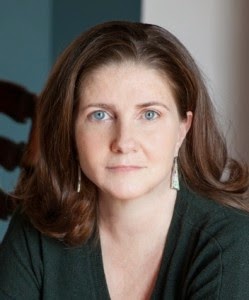
The great Lily King talks about Euphoria, Margaret Mead, Nerts, and how writing can be impossible and terrifying


Lily King is the kind of writer other writers rhapsodize over. Fiercely smart, and deeply emotional, she's a keen observer of how people struggle to live their lives--and, of course, there is her glorious prose.  Lily’s first novel, The Pleasing Hour (1999) won the Barnes and Noble Discover Award and was a New York Times Notable Book and an alternate for the PEN/Hemingway Award. Her second, The English Teacher, was a Publishers Weekly Top Ten Book of the Year, a Chicago Tribune Best Book of the Year, and the winner of the Maine Fiction Award. Her third novel, Father of the Rain (2010), was a New York Times Editors Choice, a Publishers Weekly Best Novel of the Year and winner of both the New England Book Award for Fiction and the Maine Fiction Award.  Lily's new novel, Euphoria,  is an Amazon Book of the Month, on the Indie Next List, and hitting numerous summer reading lists from The Boston Globe to O Magazine and USA Today. Reviewed on the cover of The New York Times Book Review, Emily Eakin called Euphoria, “a taut, witty, fiercely intelligent tale of competing egos and desires in a landscape of exotic menace.” The novel is being translated into numerous different languages and a feature film is underway.


Lily, thank you, thank you so much for being here.

I’m fascinated that your novel was inspired by Margaret Mead (A video on her in the Natural History Museum actually transfixed my son when he was a baby, so I have a special fondness foe for her.)  What is about anthropologists that caught you? And about Mead’s life in particular? And how and why did you change the facts of her life to craft your novel?

I stumbled on this biography of Mead about nine years ago. I wasn't looking to write anything about her or anthropology. In fact I was just starting my third novel, Father of the Rain, so I wasn't even looking for an idea. But I started reading this biography and I got to the part when she was 31 and doing field work in what was the called the Territory of New Guinea with her second husband in 1933 and they meet this other English anthropologist, Gregory Bateson, and have this crazy five month love triangle in the jungle and I thought that would make a good novel. It was sort of an idle thought, not a real thought. I didn't think I'd actually write that novel. I thought the idea would go away. But it didn't. So I started reading more about and by Mead and Bateson and more ideas started coming, though I didn't actually commit to writing the novel for five years, after I'd finished Father of the Rain. I thought I was going to stay true to the facts of her life as best I could, but the minute I started writing scenes and dialogue my characters separated from their real-life inspirations and I couldn't really control them anymore.

What was the research like for this novel? What startled you about it?  Was there anything you learned that turned what you thought you were going to write into something else entirely
?

The research took years, though I did it intermittently as I wrote the third novel. It was hard to know when to stop, hard to make that transition from research to writing. I think the most startling thing was when I did start to write and I quickly realized it wasn't my character Nell's story. I thought she would narrate it, and she did for a while, until I shifted the point-of-view for one short chapter to Bankson's, and just felt him in a different way, so much more intimately, and I understood that it all had to be told in his voice. And that changed everything.

So much of this astonishing novel is about obsessions--for work and for love. Do you think obsessions can save us as well as destroy us? Which leads me to my next question--what’s obsessing you now?

The word obsession has unhealthiness built in, doesn't it? Everything else falls away, and perspective and relativity are lost. That very much happens to the characters in Euphoria. I'm sure there have been situations where obsessions save people, but I do think the real kind of obsession tends to destroy more often than not. Right now I am slightly, but not yet destructively, obsessed with a particular kind of potato doughnut in Portland, Maine called the "old fashioned" which you get at the Holy Donut on Exchange Street. Also this summer my husband, kids, neighbors and I have been playing way way too much of card game called Nerts.

There is also an equally fascinating thread about how we should (or shouldn’t) study other cultures, and if it is possible without disturbing those cultures in some way. Can you talk about this, please?

In 1933 Anthropology as a discipline taught at universities was still a young science, only a few decades old. Modern Western Anthropology grew out of colonialism and the contact the dominant powers made with indigenous populations. These populations were then studied, occasionally out of curiosity, but more frequently out of desire to subjugate. The way anthropologists in the early part of the twentieth century spoke of their "people"  and their "village" using possessive pronouns and picking out a shoot boy and cook boy and house boy, was inherently colonialistic. My characters are still very much a part of this tradition, and yet Bankson of three is more aware of it, less comfortable with it, and much more cognizant that his presence is altering what he is observing. He is aware that his whiteness changes the way the people in the tribe he is studying behave.

What’s your writing life like? Do you plan things out or just see what happens
?

 I write only when my kids are at school. I don't work weekends or evenings, except when I'm about to hand in a draft to my agent or editor. Then I go up to the attic and don't come out, or I rent a cabin somewhere and work straight for several days.

 When I start a book I have a few characters in my head, an initial situation they're in, and a sense of the emotional journey I want to take them on. I often know where I want the characters to end up emotionally, but I never know until I get there what exactly will happen to get them there. I take notes along the way, in the back of the spiral notebooks I write in, and then when they notes get unruly, I make a little timeline of moments I write towards. Not chapters or even full scenes, just little moments that help me know where to go next. I love the part when I type into the computer the chapters in my notebook. That's when I do my best editing. That's when I can hear it in a different way. It's a complete rewrite because I am re-writing every single word, not cutting or pasting or tinkering but fully re-writing. 

What question didn’t I ask that I should have?

When I had my first reading of the tour in New York in June, my agent Julie Barer asked, "What was a high point and a low point of writing the book?" I think I said then, because the whole process of writing it was still so close to me, that there were no highs. I couldn't think of one! But the truth is that day when I wrote that short chapter in Bankson's point of view and was so stunned by the way it came out and how it changed everything about the book, that was a high. And then the rest of the time I felt the whole thing was impossible and terrifying. 

Thursday, July 10, 2014

Rochelle Jewel Shapiro talks about What I Wish You'd Told Me, history, writing, and so much more


Rochelle Jewel Shapiro isn't just an acclaimed author--she's also one of my oldest, dearest, warmest and funniest friends. The author of Miriam the Medium (Simon & Schuster) and the Indie Finalist Kaylee’s Ghost (Amazon and Nook), she is now publishing with SheBooks, which puts out ebooks which can be bought through the company, through your favorite indie store, and wherever books are sold. What I Wish You’d Told Me is a collection of three stories of women of all ages grappling with the whacky and the tragic in their lives. Secrets, set in the sixties, is  about a teenage girl whose illusions about her best friend’s family are blasted along with her faith in Kennedy’s Camelot. A Sympathetic Listener is about a twenty-four-year-old woman with cancer who, on her healing odyssey, finds connection and support from a most surprising source. In Great Aunt Mariah and the Gigolo, a seventy-something widow rocks the family when she brings home her young beau. All the stories are hilarious, sometimes heartbreaking, and absolutely wonderful.

Rochelle's first novel, Miriam the Medium, was nominated for the Harold U. Ribelow Award. Her novel Kaylee’s Ghost is an Indie Finalist. She’s published essays in the New York Times (Lives) and Newsweek, and in many anthologies. Her poetry, short stories, and essays have appeared in the Coe Review, Compass Rose, the Griffin, Inkwell Magazine, the Iowa Review, the Los Angeles Review, the MacGuffin, Moment, Negative Capability, Pennsylvania English, the Carolina Review, and more. She won the Brandon Memorial Literary Award from Negative Capability. Shapiro is a professional psychic who currently teaches writing at UCLA Extension.
 I'm thrilled to have Rochelle here. thank you, thank you, Rochelle!

In the three stories in What I Wish You’d Told Me, the characters are so real, so alive, that I can’t resist asking if they are based on people you know?

 Bitsy pieces of people I’ve known or situations I’ve lived through or read about often braid their way into my fiction. For example, my big sister had a friend who looked like the angel on top of the Xmas tree with her spun gold hair, porcelain skin, and sky blue eyes. I used the girl’s physical self for Arianna in Secrets, but everything that happened to her and her best friend, Leah, took place in my imagination. My parents sometimes make appearances as they actually were, or some variation of their issues, such as a marriage of two people from different cultures. I guess I’m still trying to work out our relationship. On good writing days, I feel as if the characters actually speak to me, presenting themselves in mind-scenes and I’m just taking dictation. But I think themes are what catapult my characters—betrayal, disillusionment, desire for connection, losing and finding oneself. Once I know the themes, my characters’ motivations and destines, they breathe on the page.


The stories have a strong sense of place. What made you choose these settings?


 Two of the stories in What I Wish You’d Told Me take place in the Rockways in Queens, New York. Like the child protagonist, Denise, in Great Aunt Mariah and the Gigolo, I was born in Rockaway Beach just up the block from the ocean in a gabled and domed summer mansion that had been carved into apartments once the rich and famous moved east. The air tasted like salt and rusted the finish off cars. I always heard the cry of gulls and the waves crashing against the jetties, lulling me like modern white noise machines. When we moved to Far Rockaway where Secrets is set, we were closet to the El where the A train rumbled by, but still within walking distance from the beach. Summer nights, we went to the boardwalk, my mother’s high heels getting stuck between the wooden planks, the crescent reflections of the moon rocking on the dark water. I could have never imagined myself living more than a few blocks from the sea as I do now.

 But there were short-comings to living where everyone wanted to summer. Remote relatives of my mother would surprise us from England, and stay at least a month in our two-bedroom apartment that was already brimming with three little girls. I had to give up my bed and sleep in the hallway on two pushed-together chairs fitted out with pillows for a mattress. While second cousins sang Cockney ditties in our bathtub, my sisters and I had to take a bucket out to our second story porch to do our business.

For me, setting stories in Rockaway Beach and Far Rockaway is elegiac. That summer mansion where I first lived, the one with cement lions guarding the front door, and a frieze of panthers bordering the lobby walls, was razed by the wrecking ball of urban renewal just as so many blocks of bungalows were, and remained that way for years. Looking down from the El of the A train, it seemed as if a terrible war had been fought there, one that we lost.

 And we had. Through red-lining, unscrupulous real estate agents who brokered fear of “the others” moving in, and the government corralling the poor into large housing projects that became permanent pockets of poverty and crime, my beloved neighborhoods became places where everyone who could afford to moved away left, and in a hurry.

But now, like the Phoenix rising from the ashes, young artists, surfers, entrepreneurs, have rediscovered its rare beauty, restoring Victorian houses, teaching yoga and surfing on the beach, giving art classes, growing corn in abandoned lots, and opening food concessions that draw long lines. A ferry now runs from the city to Rockaway. Rockaway, my Rockaway, our Rockaway, is coming back.


History, particularly the assassination of President Kennedy, plays a major role in Secrets, your first story. Are you a history buff?

 History, for me, had been an Amsco Review Book. Anyone remember them? Terse summaries of major battles and political shifts, followed by questions that you could be sure would be on your next test, and even on the Regents Exams. Even though I had huddled under my desk in elementary school, my hands over my head to protect me in case an A-bomb fell, I didn’t understand it was part of an era that would become history. The closest I came to getting the impact of history on our personal lives was knowing my father’s horror in Russia, the pogrom he survived, how he escaped his burning village with the Cossacks’ dogs in pursuit, and his journey to America in steerage. But it wasn’t until my sixteenth birthday when President Kennedy was assassinated that I understood I was living through history. And then I began to read historical fiction, first person accounts of wars, the experiences of refugees, a wide range of newspapers, and I try to soak up pop culture. History gives resonance to my life and my fiction.

  Great Aunt Mariah and the Gigolo is about a seventy-something widow marrying a forty-something year-old guy. No spoilers, but do you think, in life, that a marriage like that can work, given the age gap?
 I did know a married couple where the man was forty-something and the woman seventy-something. She never wore makeup, dyed her hair, or tried to look younger in any way. They were both artists, he a collagist, she a photographer who published coffee table books. There was such tenderness between them.

“I’ve been to China twice,” Nelson once told me, “but never with Doris, so I want to go back to see it with her.”

 And once they told me about how they phoned the pioneering artist, Alice Neel, may she rest in peace, got famous people to come to her studio to pose for her, and managed to talk them out of their clothing. Her painting of Warhol shirtless, the scar from his gallbladder surgery snaking down his midsection, is iconic. But she never got former Mayor of New York, Ed Koch, to disrobe. In fact, he kept his jacket and tie on, and his legs tightly crossed.

 “Ms. Neel,” Nelson said, with Doris egging him on, “we’d like to come to your studio to pose for you. We’ll take off all our clothes.”

 “No, thank you,” Alice Neel said.

 “But my husband is thirty-five years younger than me,” Doris piped in. “Imagine what a nude portrait we’d make? And we’ll pose in any position you’d like.”

 Alice Neel broke into hysterical laughter, but declined their offer. I bet if she weren’t already so elderly and crippled with arthritis, she would have done it, and Nelson and Doris would be hanging at the MOMA.

The last party I went to where I was expecting to see them, Nelson was there alone. “Doris isn’t feeling well,” he said sadly, “but she insisted that I come.” He left after twenty minutes. I haven’t kept in touch. I hope that Doris is all right. But I know she and Nelson will be together until death do them part. And isn’t that the best kind of love at any age?

 What’s obsessing you now and why?

 I have four young grandchildren now and five great nieces and a great nephew, and I would like to publish something that they all can read. But even in my comic stories, all my characters have problems that parents wouldn’t want their little kids knowing about, and most of my characters have sex. I mean, nobody asks Mrs. Cottontail how she got all her bunnies, do they? And as for a character overcoming life’s problems, not many of us have to worry about ending up in Farmer McGregor’s stew pot. Sure, the Grimm Brothers knew how to be grim, but today, kids’ mothers only read bowdlerized versions of the fairy tales to them. What if modern kids found out that Cinderella’s wicked stepmother handed her eldest daughter a knife and told her to cut her big toe off so her foot would fit the glass slipper?  Once you become queen, you won’t have to walk anymore,” her mother advised. And when that daughter’s fraud was found out, and the prince rejected her, the stepmother turned to her younger daughter, again proffering a knife, and told her to cut off her heels.

 Even Mother Goose has been plucked clean. Most nursery rhyme books change the words so that the woman who lives in a shoe doesn’t slap her children soundly. In most new version of Rockabye Baby, the cradle doesn’t even fall.

Oh, well, maybe something PG-rated will come to me. Any suggestions?

         
What questions didn’t I ask that you wish I had?

When will the film based on your last novel, Kaylee’s Ghost, be coming out? J


Ellen Sussman writes about A Wedding in Provence, truth in fiction, and so much more


I'm so thrilled to have Ellen Sussman here!  Ellen is the author of four national bestselling novels: A Wedding in Provence, The Paradise Guest House, French Lessons and On a Night Like This.  All four books have been translated into many languages and French Lessons has been optioned by Unique Features to be made into a movie. Ellen is also the editor of two critically acclaimed anthologies, Dirty Words: A Literary Encyclopedia Of Sex and Bad Girls: 26 Writers Misbehave. She was named a San Francisco Library Laureate in 2004 and in 2009. Ellen has been awarded fellowships from The Sewanee Writers Conference, The Napoule Art Foundation, Hedgebrook, Brush Creek, Ledig House, Ucross, Ragdale Foundation, Writers at Work, Wesleyan Writers Conference and Virginia Center for the Creative Arts. She has taught at Pepperdine, UCLA and Rutgers University. Ellen now teaches through Stanford Continuing Studies and in private classes out of her home. She has two daughters and lives with her husband in the San Francisco Bay Area.

Thank you so much, Ellen!


True or False
By Ellen Sussman

Truth: I was married in France.
Fiction: Olivia and Brody head to France to get married.
Truth: I have two daughters, now 26 and 28
Fiction: Olivia has two daughters, 26 and 28
Truth: I found love the second time around.
Fiction: Olivia found love the second time around.

And yet here’s one more truth: A Wedding in Provence, my new novel, is not autobiographical! Not even close. Nothing that happens in the novel happened in my life. And yet…

There is a lot of truth in my fiction.

I wanted to write a novel about finding love later in life. It seems a bit crazy to commit to marriage in your forties or fifties or sixties – by then you’ve learned so much about how marriages don’t work. I had been thinking about this a lot because I had done it myself. I fell madly in love with a guy and took that wild leap of faith. Love is complicated; love is messy and rich and fulfilling and infuriating. Love is a really good topic for a novel.

And I wanted to write about raising twenty-something daughters. They’re independent but they’re not. They’re easier but they’re not. They’re looking for love, careers, and a better relationship with each other. Great stuff for novel material.

But I didn’t write my own personal story. I invented characters that would fall into the complicated world of A Wedding in Provence. As a writer, I had a chance to grapple with all those conflicts while telling the story of someone else’s life. I’m not Olivia, my husband isn’t Brody and my daughters are nothing like Nell and Carly. (They even agree with me!) But my fictional characters and the fictional plot is infused with all of my musings about love and family.

I’ve written both fiction and memoir. These days I’m much more comfortable with fiction. And oddly I find that I can tell the truth more in fiction. Maybe it’s because I’m hiding behind my characters and an invented storyline. It’s safer than talking about my life. And I’m willing to dig deeper, to expose more.

It’s fiction. And it’s absolutely true.

Sukey Forbes talks about The Angel in My Pocket, grief, possibility and healing

-->


I imagine that writing this book was both painful--and deeply healing. Would you talk about that please?

Yes, it was both painful and healing to writing this book.  It was healing in that I had to revisit some of the ideas I had come to believe as truths through this process and get more information to back them up.  It has also been healing sharing the book with people and getting the validation that the book helped them to heal as that was the goal of sharing my story.  Knowledge is empowering and powerful and that helped me feel even more solid in my own path.  But it was also painful to write this book.  Grief never leaves us, we just learn to store it and manage it.  There were particular spots in the book that brought me back to very dark places in my grief.  Going to those places and writing about them was critical to the honesty of the story but it was difficult for me to step out of my new normal healthy and happy state of daily being and walk back through some of the dark days.  I’m glad I did because the whole point of writing the book was to offer a story through grief and out on the other side that might help others but yes, the process of writing it was painful and difficult in many regards.

One of the questions you ask is where has your daughter gone--and your answers are startlingly authentic, at least for me, and I imagine for very many people. Do you still the same way or have your feelings changed?

As I write in the book, the day that I had my ‘aha’ moment with knowing that my daughter Charlotte was in a good place, separate and yet still with me, changed my whole course of grieving and then living.  Life and death, I have come to believe, are just points on a continuum.  I still hold that same belief system and it is positively reinforced regularly.

What do you think is the one mistake people make about grief?

Grief is not unrelenting sorrow.  There are moments of lightness and laughter and those moments are almost more difficult than the deep sorrow because they feel, especially at first, totally wrong.  But our bodies and we as living and thinking beings, are wired to be resilient.

Along those lines, I think the other mistake people make about grief is that it undoes a person permanently.  While grief does stay with us forever it also changes us and deepens us and leaves us wisdom as its gift.  If we are open to the gifts in grief we emerge from it more solid, strong, loving and deep.

What's your writing life like now? Do you have rituals? Do you outline or just follow your muse?

I am a journaler.  Most of my writing is seeking to understand.  My way of exploring thoughts and ideas is usually on the page.  It’s a physical exercise for me and I use a good old fashioned pen and spiral notebook.  I’ll ask my self a question then sit and write non-stop for 10 minutes as a warm up and see what comes out on the page.  I find my most honest writing appears that way.  Some of it is not fit to be shared J

I am terribly undisciplined about my scheduled writing but my best work happens early in the morning before the kids are awake, often even before the birds are awake, when it is quiet both in the house and in my mind.

No, I do not outline.  I probably should.  But my writing comes from deep within and I find that if I try too hard to structure it that it is more difficult for my true voice to emerge.

What's obsessing you now and why?

I’m actually quite focused on the gifts of grief.  The conversation about how we move through grief as a culture and individually is evolving.  I think too much literature on the grief process in the past 60 years has been written by health professionals who are dealing with people in protracted states of grief rather than by people who have found coping skills and tools to work their way through the grief and back to a full life.  There are great life lessons in grief and not a lot of time has focused on them.  I don’t by any measure mean to imply that grief is easy.  It is not.  It is gut wrenching, and complicated, and painful, and confusing and we all go through it differently.  BUT WE ALL EMERGE and I want to be a part of the underscoring of the message that we all emerge.  We all are programmed to be resilient.  We all survive, and thrive, and if we are open to it, we are better people, parents, partners, citizens of the world for having experienced that depth of sorrow.

What question didn't I ask that I should have? 
 What makes your book unique?
Are you happy?  Do you believe in God?

Sunday, July 6, 2014

Chris Bohjalian talks about Close Your Eyes, Hold Hands, nuclear power plants, how being the dad of a daughter sparked the book, and so much more


Chris Bohjalian may just be one of the kindest, most generous authors around. He's the kind of writer that when you do an event with him, though it's obvious that 450 of the 500 people in the audience are there for him, he makes you feel that they're there for you, too, and he even holds up your book and exhorts everyone to buy and read it.  He's the critically acclaimed author of 17 books, including nine New York Times bestsellers.  His work has been translated into over 25 languages and three times become movies, and they've been chosen as Best Books of the Year by the Washington Post, the St. Louis Post-Dispatch, the Hartford Courant, Publishers Weekly, Library Journal, Kirkus Reviews, Bookpage, and Salon. 

You want to talk awards?  Chris' include the ANCA Freedom Award for his work educating Americans about the Armenian Genocide; the ANCA Arts and Letters Award for The Sandcastle Girls, as well as the Saint Mesrob Mashdots Medal; the New England Society Book Award for The Night Strangers; the New England Book Award; a Boston Public Library Literary Light; a finalist for the Lambda Literary Award; and the Anahid Literary Award. His novel, Midwives, was a number one New York Times bestseller, a selection of Oprah's Book Club, and a New England Booksellers Association Discovery pick. He is a Fellow of the Vermont Academy of Arts and Sciences, too.

His dazzling new novel, Close Your Eyes, Hold Hands, is about  homeless teen girl, a nuclear meltdown, and how we feed our need for connection--and of course, it's about much, much more. Thank you so much, Chris for being here!  I'm so jazzed to host you!


I remember you talking about the research you did about plane crashes, and how in depth it was, so I cannot wait to hear you talk about the research you did for Close your Eyes, Hold Hands. What did you learn about nuclear power that startled you? About teens fighting mental illness? And should we be worried about nuclear plant accidents more than we already are? 

Sometimes my books demand a lot of research. But “Close Your Eyes, Hold Hands?” Not so much. The creation of Emily Shepard’s voice was. . .alchemic. It really was. The only other time I was so sure of a voice so quickly was years ago: Connie Danforth in “Midwives.”

Part of the reason why I found the voice so easily, I believe, is that I have written about teens in trouble often over the years as a Burlington Free Press columnist. I’m a big fan of Spectrum Youth Camp; Family Services in Burlington, Vermont and the remarkable work they do, and so I’ve met a lot of their kids. I’ve heard the teens’ stories and seen their faces. I’ve met the kids who are going to be okay, and the kids who are already so far down the rabbit hole that there’s no coming back.

I also know some of their staff. I went to college with Annie Ramniceanu, for instance, their associate executive director and an immensely gifted therapist and counselor. One day when I was having lunch with her, she started telling me how some of the kids – the teens who are falling through the system – would build igloos against the Vermont cold out of trash bags filled with wet leaves, and I knew instantly the novel I wanted to write.

As my 20-year-old daughter, Grace, would tell me when she finished reading the first draft, “Dad, please take this as a compliment, because I mean it that way: Your sweet spot as a novelist is seriously messed up young women.”  I know she’s right.

And I did learn a bit about how nuclear plants work – thanks to Arnie and Maggie Gundersen at Fairewinds Energy Education. But I really find nuclear power absolutely baffling. Their website is incredibly interesting ( www.fairewinds.org ).

And, yes, nuclear power does make me nervous.  The exclusion zone in my novel in Vermont is small compared to the actual exclusion zone around the Fukushima Daiichi plant in Japan.

You get so deeply into the head of Emily that it feels as if you are channeling her. How did you do such alchemy? (P.S. I know the answer to this, but I love it so much that I want you to talk about it.)

Part of it was the voices of all those teens I have interviewed over the years. I still have the articles and my memories of their stories remain vivid.

And part of it was my own daughter, Grace. I can’t count how many times I would be failing to find the right synonym for a word or to capture the perfect expression a really smart sixteen or seventeen year old girl would use, and so I would text her. I would ask her questions like, “What’s a hip synonym for ‘tattoo?’” Or “I need another expression for ‘wasted.’ Any suggestions?” And she would text me back whatever words made sense in context. Trust me, you would not have found the word “bitchcakes” in the novel without her. She was amazing.

And, finally, I focused a lot on the universals of age, not necessarily the particularities of gender. It is how I have written across gender in the past, and how I imagine I will in the future.

To me, this book feels different than any of your others, which leads to the question, what sparked the writing? What was haunting you that made you want to write this particular novel?

First of all, thank you. I never want to write the same book twice.

And what sparked the writing? I’m a dad of a daughter. The idea of a teen girl living alone in an igloo made of trash bags and wet leaves broke my heart. That image indeed haunted me – and spurred me on.

I have to say that the title is one of the most moving and greatest titles I’ve read in a long time. Did you always know that would be the title? Are titles difficult for you? 

As Emily Dickinson wrote, “Tell all the Truth but tell it slant.”

That is definitely how my Emily Shepard writes and thinks. There is a slant to her story – and an edge to her prose.

And the words that comprise the title? They sound, she reminds us, like something we might read on a drugstore greeting card. Maybe the accompanying image is a couple holding hands as they jump off a dock into a placid lake one beautiful August afternoon. But, of course, their origin is far darker. Far sadder.

And that is the truth of my poor Emily’s life.

As for titles: They are usually really difficult for me. I agonize. I struggle.

But in this case? Not at all. I knew the title for this novel early on.


What’s obsessing you now and why?

I am writing a novel about sex trafficking and, yes, I have grown very protective of this character, too.

But it’s the summer. If I am obsessed with anything, it’s my biking.


Jo-Ann Mapson talks about Owen's Daughter, Santa Fe, Italian greyhounds, and so much more


 Want to know whom I credit for my Old Gringo cowboy boot addiction? My friend, writer Jo-Ann Mapson. Back when email first started, I tracked her down, wrote to her, and virtually insisted that she befriend me--and she has, through the years offering love, support, humor and tips on boots! Jo-Ann is the author of eleven novels and a book of short stories.  Her work is widely anthologized and her literary papers are being collected by Boston University’s Twentieth Century Author’s Collection.  Hank & Chloe was her debut novel.  Blue Rodeo was made into a CBS TV movie starring Kris Kristofferson.  The Wilder Sisters and Bad Girl Creek were Los Angeles Times bestsellers.  Solomon’s Oak won the American Library Association’s RUSA award for women’s fiction.  Many of her books have been Booksense titles and Indiebound choices. Her wonderful new novel, Finding Casey, featuring some of the characters from Solomon’s Oak, will be published October 2012.

Thank you so much, Jo-Ann--for this interview and for everything.


 The questions I always ask are what sparked this particular book and did anything surprise you in the writing?

I’ve wanted to write the sequel to Blue Rodeo for twenty years.  This book is kind of a kind of sequel, but also a stand-alone story, and it fits into Solomon’s Oak and Finding Casey as well. I placed my BR character Margaret Yearwood as Glory & Joe Vigil’s next door neighbor in Finding Casey.  Maggie often babysits their children--the Vigils’ five-month-old daughter Sparrow, and Aspen, their “adopted” granddaughter.  Aspen is a handful.  She’s also kind of psychic.   

Your characters are always so blazingly alive. What kind of character work do you do?

I love to people watch, eavesdrop on conversations, and in that foggy-not-quite-clear thinking state, I imagine my characters driving, eating at one of the many interesting restaurants here, splurging on a pair of Old Gringo cowboy boots downtown, or waiting for various appointments, being annoyed by Santa Fe wind, and the loneliness people feel at whatever age.  I think a lot of people are quite lonely in our current world.  Loneliness can lead to some foolish choices.  I also love to write about romance, but realistically, and for me that means timeworn parts and issues are involved.  In Owen’s Daughter, Maggie finds out she’s in the early stages of a serious disease, just days before her grown son Peter arrives with his own suitcase of troubles.  Skye, Owen’s daughter, is freshly out of rehab at the ripe old age of 22, and going through a divorce.  Her addiction problems stem from bad parenting, a bad marriage, and having a child at age eighteen.  Sounds awful, but I love to weave stories around real life problems.  I think that makes the payoff much more rewarding.

What do you hope readers come away with?

A fervent desire to purchase all my novels, make them into Hollywood movies, and tell everyone else about this writer they must read.  Nothing makes my day when I hear from a reader who enjoyed my book, and to hear that reading got them through a rough day, or year.

What's your writing life like these days?

I live 20 minutes out of Santa Fe proper, on a dirt road with lots of solitude. I write every day, correspond with my MFA low residency students, I walk the dogs and ponder aging, and dislike the wind.  Facebook has given me a community even when I’m alone in my office, which I truly enjoy.  Occasionally, a Facebook friend will say, “Wait, are you the Jo-Ann Mapson who writes books?  I thought you were just a greyhound person.”  It makes me laugh.  Can’t I be both? Aging is weird.  My mom is almost 92, still lives in So. California, drives her BMW, plays bridge, and tells me what to do.  Her best friend died this year, and I think those losses when we’re older, are just devastating.  I decided that I couldn’t bear Opal going away for good, so I made her a character in this book, and in the one I’m currently working on.

What's obsessing you now and why?

The book I’m working on now is based on a true story, and was the very first novel I ever tried to write.  I failed miserably at it, thank goodness, because I’ve had so much time to let it percolate.   It requires massive research, some international travel, and more solitude than anything else I’ve ever written. 

What are you doing for fun? 

I rescued an Italian greyhound from Hobbs, NM, named her Chick-lit.  She is a handful.  First female IG I’ve ever had.  Very high prey drive.  That’s four dogs now, and it’s like living with a posse of clowns.  Henry just sauntered in wearing a pair of my underwear.  God knows how he got them on.  He looks both humiliated and quite proud.  Dogs are just amazing to me, as are horses, and birds.  I love to put animals in my books.  Dogs, cats, horses, whatever, are neutral love objects.  People often communicate through them.  When I finish a book, I like to make jam.  Tomorrow I’ll be peeling Meyer lemons and oranges for marmalade.

What question didn't I ask that I should have?

Why hasn’t Oprah called?

Wednesday, July 2, 2014

High school hazing, nuns and the funniest dialogue since Richard Price's The Wanderers-- Anthony Breznican talks about his mind-blowingly good debut, BRUTAL YOUTH


Every once in a while I start reading a book that I think speaks exactly to me. As someone who endured a harrowing high school life, I was immediately drawn to Anthony Breznican's Brutal Youth (great title and brilliant cover, too, by the way). The world he creates is so real, that if you take your eyes off the page (go ahead, I dare you), you'll feel disorientated. Breznican's characters, are each so bristlingly alive, you'd swear they were tugging at your arm, spilling their stories. Heartbreaking, funny, boldly imaginative, cruel and gentle, too, Brutal Youth stuns. Anthony has worked as a reporter for The Arizona Republic, Associated Press, and USA Today, and is currently a senior staff writer for Entertainment Weekly, and I'm so honored to have him here.


Brutal Youth has one of the most astonishing openings I've read in a long while. Did that opening come to you originally, or did it come after you had written parts of the book?

I always knew I wanted to start with something intense and visceral - a real grab-you-by-the-collar opening that would thrust you into a school where the danger wasn't getting a good grade, or getting a date ... It's basic survival. I'd heard this story from my own high school about a kid who flipped out in the hall after many years of being teased and tormented. He started swinging his bag in a circle, and clobbering anyone who got near. I heard one of the teachers jumped on his back, and then rode him around like it was a rodeo when even that didn't slow him down. As another kid who carried his whole locker in his book bag, I wondered: what could have made him snap? We all face hard times and feel angry and powerless, but what makes someone really lose it and switch from trying to lay low to trying to cause pain. I amped up that old legend, added what I'd consider kind of a horror element to illustrate that this was a story with fangs. But sadly, we've seen plenty of instances over the years where a kid goes over the edge and causes much more catastrophic damage.


Which, of course, leads to a structure question. Did you plan out this book or just follow the characters to see where they might lead you?

I knew I wanted to write about four main freshmen -- Davidek, a nice kid who just wants to avoid trouble; Stein, who loves trouble and fights every good fight; Lorelei, who is desperate to be liked (but doesn't like herself very much) and Green, who charms his way to safety, but loses touch with where he came from.  After that, the story unfolded as I threw a lot of menace, mistrust, and double-crossing at them in the form of adults who have a lot of growing up to do, too.
\

 I always want to know what sparked a book, what was haunting you that nudged you into writing this?

I wanted it to be a war story about trying to save yourself, but maybe losing yourself along the way. I was a feisty, rebellious kid and I have a soft spot for troublemakers. I also have a pretty big problem with authority. Haven't we all witnessed people in charge who probably shouldn't be? BRUTAL YOUTH came from my efforts to write a coming-of-age story that was also a thriller. Hopefully it also has something to say about the forces that shape us (or warp us) when we're young.

As someone who was bullied in junior high and high school (I narrowly escaped being beaten up for wearing a beaded headband (don't ask) because the girl was caught calling in a phony bomb threat and was expelled), I still remember all the humiliations and violence--and your book brought them all vividly to life. Were you bullied as a kid? What was it like writing this book and living with all that brutal growing-up?

A beaded headband? Clearly you had it coming! I joke, but that's because some of these experiences seem so absurd once you get some distance on them. But at the time they are terrifying -- and it feels like there is no escape. I was pushed around, chased around, and beaten up from time to time. (That's an occupational hazard when you are a teenage wise-ass.) What's worse is when you are being emotionally or psychologically harassed by an adult -- teacher, parent, bus driver, whomever -- and that happens ALL THE TIME, whether we like to admit it or not. I've read some criticism of the book where people say, "oh, this kind of thing could never happen. It's unbelievable." Really? Because do a google news search of bullying in high school, and see what turns up. BRUTAL YOUTH is fiction, and compounds a lot of these stories in one particularly bad environment, but I just saw a news report about a middle school teacher caught on video grabbing a boy by the face and shoving him into a wall. Saying things like, "no, someone would step in and stop this" assumes someone is paying attention. And sadly, most of the cruelty out there doesn't end up on video.


 Despite the brutality, the book is also ragingly funny, and spot on about the way kids think and talk, with an eye for dialogue that I thought rivaled Richard Price's in The Wanderers. How did you go about creating your characters?

I'm really glad you feel that way. I worry that amid all the talk of the heavier elements of the book, it sounds like a painful slog. I definitely wanted to break the reader's heart at times, but I also wanted them to feel it is a white-knuckle ride, and to laugh a bit at the way deep, dark trouble often comes full circle into absurdity. One of the characters who seems a little unbelievable in BRUTAL YOUTH is the parish priest, who is literally skimming cash out of the collection plate to fund a gambling addiction. Well ... That was inspired by a real guy from my school's church, who got caught after pinching about $1.3 million from the parish. It's insane, and funny in a kind of head-shaking way. Who could be that sinister?  But it also happens to be true. Life is funny, sad, infuriating, and baffling -- sometimes all at once.


What's your writing life like?

I work full-time as a reporter covering the film beat for Entertainment Weekly, so I spend a lot of time telling the stories of other storytellers. I was drawn to that because I've always wanted to tell one of my own. My wife is a librarian and when she was pursuing her masters I found myself with a lot of free time. BRUTAL YOUTH was written at the kitchen table while she studied at the desk in our one-room apartment. I always wanted to give her a book to catalog that was written just for her. And here it is.


What's obsessing you now and why?

We have two little kids now, an infant son and a daughter who is about to go into kindergarten. They keep me pretty occupied! Obviously, empathy is a big deal with me, and I want them to grow up and be strong, yes, be smart, absolutely, but most of all I want them to be good. Now that my daughter is almost 5, she's one of the big kids in her pre-school class. I've learned that she is one of the biggest defenders of the little 3-year-olds who are just entering the group. She welcomes them, befriends them, watches out for them amid the roughhousing of the big kids. I'm obsessed with these stories! It's scary to start out somewhere, whether it's pre-school or a new job. I'm proud my little girl knows that, even at such a young age, and tries to make it not so scary for others. It's making me rethink my dark, twisted, and cynical view of the world!

Naomi Elana Zener talks about Deathbed Dimes, writing, Hollywood, and so much more


Hollywood and the law--what could be more delicious in a novel? Naomi Elana Zener is the author of both Deathbed Dimes and satire fiction, which is posted on her blog Satirical Mama. She blogs for Huffington Post and her articles have been published by Erica Ehm’s Yummy Mummy Club. Naomi is also a practicing entertainment attorney and I'm thrilled to have her here. Thank you, Naomi!.


What sparked the writing of Deathbed Dimes?

Back in 2005, I conceived an idea for a TV series about estate litigators. I ended up shelving the idea, as I was preoccupied with building my entertainment law career. As time wore on, in late 2008 I watched "The Bucket List" with Morgan Freeman and Jack Nicholson, and devised one for myself. Item #1 was to write a novel. So, I dusted off the idea for Deathbed Dimes, played with it and came up with a unique idea for a novel that married fiction genres (think Helen Fielding meets John Grisham), as well as the zeitgeist of greed that permeates the underworld of estate litigation battles with a Hollywood twist.

The novel is set in the world of law and Hollywood, two worlds you know a lot about. Tell us about all of this, please.
I studied Estates and Trusts law, with a focus on Estate Litigation,  when I pursued my JD and LL.M., so I knew a lot about the area of law. When I entered the fray of practising entertainment law, when I decided to write Deathbed Dimes, I thought that it would be fascinating to marry my knowledge of estate litigation with the zany world of the entertainment industry and those in it. Estate litigation battles affect everyone in every walk of life. I've read so many different cases about families fighting over money, from those disputing a  $50,000 estate where the legal fees were triple that amount, to those that involved hundreds of millions of dollars and many disgruntled family members who felt entitled to inherit that wealth. In practising entertainment law, given that everyone dies, including rich and famous celebrities, it made sense to me to set Deathbed Dimes' story in Los Angeles, amongst the glitz and glamour of that world, even though the estate battle arc in the story isn't focused on that world.

How do you write? What’s your process like? Do you outline or just follow your muse (if there is such a thing!)

I outline. I make notes. I jot down dialogue as it comes to me to save for a character or a conversation that will appear in the short story or novel I'm working on. I don't fill notebooks of pages with ideas for a novel, or pages on end for a short story simply because I also like to let the story flow as it comes to me. Everything is my muse, from my marriage, my kids, to what I read, watch on TV/hear on the radio, and observe daily, and to people who flow in and out of my life. I always start to write from what I know and embellish from there.


What’s your writing life like?

Wonderful. I love to write. I miss it when I'm not doing it. I love to enjoy family time, work (my writing secret identity is being an entertainment lawyer), leisure, but my characters, ideas, worlds, and the like are never far from my mind. That's why I'm weighed down heavily by a large bag full of notebooks and my iPhone to write when a moment of inspiration strikes.


What’s obsessing you now and why?

Several things. First, my second novel. I'm waiting for notes from my editor so that I can write the third draft to use for querying new literary agents (I left my last one). Second, my third novel idea that I've started to flesh out and outline. Third, a short story I'm trying to finally finish, but life is getting in the way.


What question didn’t I ask that I should have?

There are many I could throw at you, but I tend to be open on my writing, but private about my personal life. I will offer that you didn't ask me who my favourite shoe designer is. For that question, I could never give an answer. It would be like trying to pick a favourite child. I love all of my shoes (well those that burned a deep hole in my wallet Carrie Bradshaw style).

Tuesday, July 1, 2014

Robin Black talks about Life Drawing, writing about craft, not knowing where a story is going, and so much more


 Robin Black's unsettling portrait of a marriage, LIFE DRAWING, is one of the most arresting novels I've read. And, I have to say, that her first short story collection,  IF I LOVED YOU, I WOULD TELL YOU THIS, which was published to international acclaim, was one of the best short story collections I've read. She's received grants from the Leeway Foundation, the MacDowell Colony, The Sirenland Conference, and she's also the winner of the 2005 Pirate's Alley Faulkner-Wisdom Writing Competition for short story.  I'm so thrilled to have her here. Thank you so much, Robin!

Life Drawing is your first novel. What was it like moving from short stories to a novel?  Will you go back to short stories or are you now madly in love with the novel? Do each of the forms have its own satisfactions? (and discontents?) 

I went into novel writing like a whiny child, “But I don’t waaaaant to. . . “ I knew that there were professional reasons to do it and had signed the infamous two book deal so many post-MFA folks sign – if they are fortunate. The stories, first, and then. . A NOVEL! I was just so certain that I was a short story writer, that I had a short story writer’s mind - whatever the heck that even means. I had actually already written a bad novel, so all I knew about myself as a novelist was that I wasn’t any good. But then, the second I started LIFE DRAWING, I was 100% comfortable, and the second I finished I knew the next book would be a novel.

I have written one short story since then, and I was relieved that I still could, though it felt like using a part of my brain I’d almost forgotten I have. The part that understands compression and is as focused on what to exclude as on what to put in. You know, we writers are endlessly making analogies, and there are dozens out there about short stories and novels. Short stories are love affairs; novels are marriages, and so on. My latest take is that short stories are strict parents and novels are permissive ones. Short stories have curfews, and set limits. Novels don’t tell you when to get home and pretend they don’t know what you’re doing with your boyfriend in the basement.

I do love them both – and essays too - but I have this feeling I may have discovered, in my fifties. and very much against my own strongly held views, that I have the nature of a  novelist.

I loved the tense, nerve-jangly way that the novel proceeded. How did you go about structuring the novel and was there anything about that that surprised you?

To be honest, everything about it surprised me. I don’t do outlines, my mind just doesn’t work that way. The one thing I knew, though, all the way through, was that somehow, by the end, I had to fulfill the promise of the big plot disclosure in the first paragraph. But that was all I knew. Except for that give-away in the opening lines, nothing was planned.
But in some ways the most surprising aspect of the whole process was that unlike many of my stories which are written in bits and pieces, often patch-worked together and then reworked endlessly, this novel came out in order. I started on Page One and wrote through to the end with very few detours or changes until the revisions I did with my editor, none of which altered the plot, just cut a bit, reordered a bit, and added a couple of scenes. I have rarely written a short story in so straightforward a way and the last thing I expected was to write a novel in one kind of spurt – a year-long spurt, but still. It was weirdly straightforward.
Though – and this really matters – that spurt arrived after first, writing that “starter novel” that will never see the light of day and then years of misery and doubt about whether I could write a decent novel at all. So whenever I start kidding myself that this was easy, I have to remember the agony of all that doubt. Or I can just ask my husband who has keen, keen memories of how angst-ridden I was for how long.

So much about the novel is about creative partnerships and whether or not they work.  Do you think the two--love and work--can ever really be balanced? 
There were many ways in which I used my narrator Gus as a way to play with the notion of having a life very different from mine. I’ve been a mom since I was twenty-five; she is childless. I am very close to my own mother; Gus has no memories of hers. And I am married to a lawyer, while she, a painter, has been with a writer for nearly thirty-years.
I think that many of us writers (or maybe all artists) who aren’t married to someone in the arts have a pretty romanticized notion of what that would be like. Sort of like Bloomsbury only maybe without quite so much partner swapping. And though it sounds funny, one result of really delving into the lives of my married artist characters was that I now think that though there might be some companionable aspects, it would also have the potential to be sheer hell. I’ve become ever more aware of how nice it is that my husband and I work in different enough worlds that there’s no competition. That when we’re sick of our own day jobs, we can go to one another for something truly different.

But as for balancing love and work, I haven’t always been good at it. I started writing seriously at about 40, and I knew that it was going to take something quite extraordinary with three kids at home, one of whom has special needs, to get lift-off in this pursuit and I think I was a pretty sub-par wife (and mother) there for a bit. I was an absolute workaholic, like a crazy person who has fallen in love with an activity. And I’m not even sure I regret that, because it gave me something I desperately needed without which I would increasingly have been a very, very bad mother and wife. But it was an uneasy balance at the time.

Your title is actually perfect for the book, on so many levels, beside the most obvious one. Can you talk about it? 

I’m not great at titles, but when I hit on this one I was absolutely sure it was right. Leaving aside the obvious – my narrator is a painter who has trouble painting people – it is of course about what I feel I’m doing while writing. Drawing lives. Creating people, not depicting real ones, but animating something which has no life of its own. I have a short story in my collection about a portrait painter, and it’s called “Immortalizing John Parker.” In that, as in this, the overlap between what I say about the painting process and what I experience in my own creative life is pretty massive.
And that includes the fact that like my narrator, Gus, I struggled early on as a writer with specific aspects of “life drawing” or, as we call it, character depiction. I was always very interested in psychology and in moral dilemmas, but I had trouble putting those things into bodies, drawing – there it is – lives, and even just physical appearances that would render my characters more than vehicles for me to work through emotional issues or other non-corporeal aspects of human life.
I’m tempted to say that writing about visual artists is a good way for any fiction writer to learn about herself and about challenges she may have but not quite see, that jump outin the context of another creative pursuit.


What’s your writing process like? Do you fly by the seat or your pen or do you know where you are going? 

I make it up as I go along. I wander in the dark looking for light. I never outline – not only because I can’t think that way, but because the few times I’ve tried, the process has felt like paint-by-numbers to me, like I was just filling in the colors as opposed to feeling like a process of discovery. I strongly believe that for me, with my work, the more surprise there is in the process of writing, the more surprise and excitement there will be for the reader.
But the fact is that even if I believed that outlining would help the work, I still couldn’t do it. I have very significant ADD and though I medicate for it which helps a lot, I’m still along, long way from being organized enough to plan a work ahead.

What’s obsessing you now and why?

Other than book release? I know that you, and any authors reading this, understand that when a book is coming out, it’s hard for that not to feel the only event in the cosmos.
But in fact I am also focusing on the next book. There are two that I have in mind and I’m not sure which is going to bubble up first. I won’t say more than that because it’s all still at that fragile stage where it feels like if you breathe too hard, you’ll lose the possibilities.


What question didn’t I ask that I should have? 

Hmmmm. I guess that I always want people to ask me about the essays I write about being a writer and on the craft of writing, because my other obsession right now is turning those into a book. Many are posts I’ve done the Beyond the Margins (beyondthemargins.com) but there are others too. I’m an absolute craft nerd, and have discovered in myself this very strong impulse – even need – to write about my experiences writing, the life of it, my own personal history with inhibitions and with discovered directions. So, as I puzzle through my fiction future, I am also working on that. Oh, and then there’s the book I’m writing with my daughter, who has special needs. And then there’s. . . and then there’s. . .  Always more to talk about, always more to write!!